Planning and Design
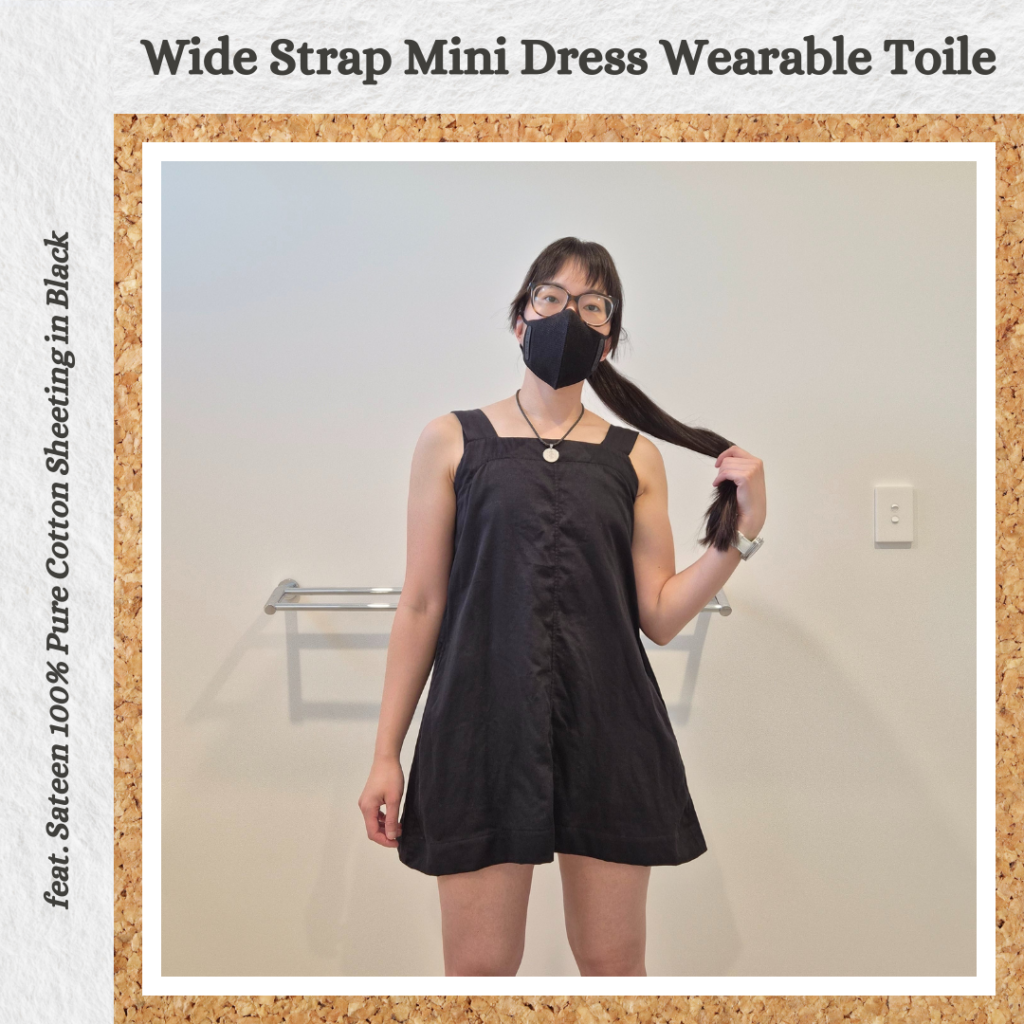
I usually don’t care much for strappy dress designs, but honestly, the elasticated back of this dress makes it super cute. And since it’s wide strap, that made it more acceptable to me haha. It was also a case of I saw the pattern and photos and immediately thought of the fabric I would make this in. It also didn’t seem to hard to do so I was pretty motivated to toile it and move onto the actual fabric I want to use.
Materials
- Pattern
- Wide Strap Maxi Dress (Peppermint Magazine)
- Fabric
- Sateen 100% Pure Cotton Sheeting – Black
- Thread
- Rasant col. 4000
- Notions
- 38mm Knitted Elastic
Sustainability Check
👍 Fabric is 100% cotton so biodegradable
🤏 Rasant us OEKO-TEX but not biodegradable
👎 Elastic is likely mostly polyester
Construction
Pattern Adjustments
I almost got off to the wrong start as I chose size B based on memory of bust measurement which was wrong lol. Luckily hadn’t done that much adjustment or tracing yet.
My actual high bust measurement was a size D. Since the pattern was drafted for a B cup that meant I needed to do an half inch SBA. I snipped and pivoted and then overlaid the SBA bodice over the original pattern. I retraced the size D line for top and armhole to match facing, since that was based on my high bust measurement which doesn’t change after SBA. The SBA reduced the overall side ‘width’ to a size C so graded from D at the top of the sleeve to C at the first lengthen/shorten line and applied the same to the back piece. I didn’t bother shortening the bodice as it’s an A line skirt that I am drastically shortening from the bottom (it won’t be maxi haha) so probably won’t make a difference. To shorten the dress I traced remainder of of the bodice pattern to the end of A0 page (since it’s a maxi dress it spans 2 pages to cover the total length).
I thought the SBA was going to be tricky because it was basically an A-line from high bust downwards but I think that actually made it easier because it didn’t really matter due to the large amount of ease. It was just tricky in terms of I was overthinking everything haha.
Sewing
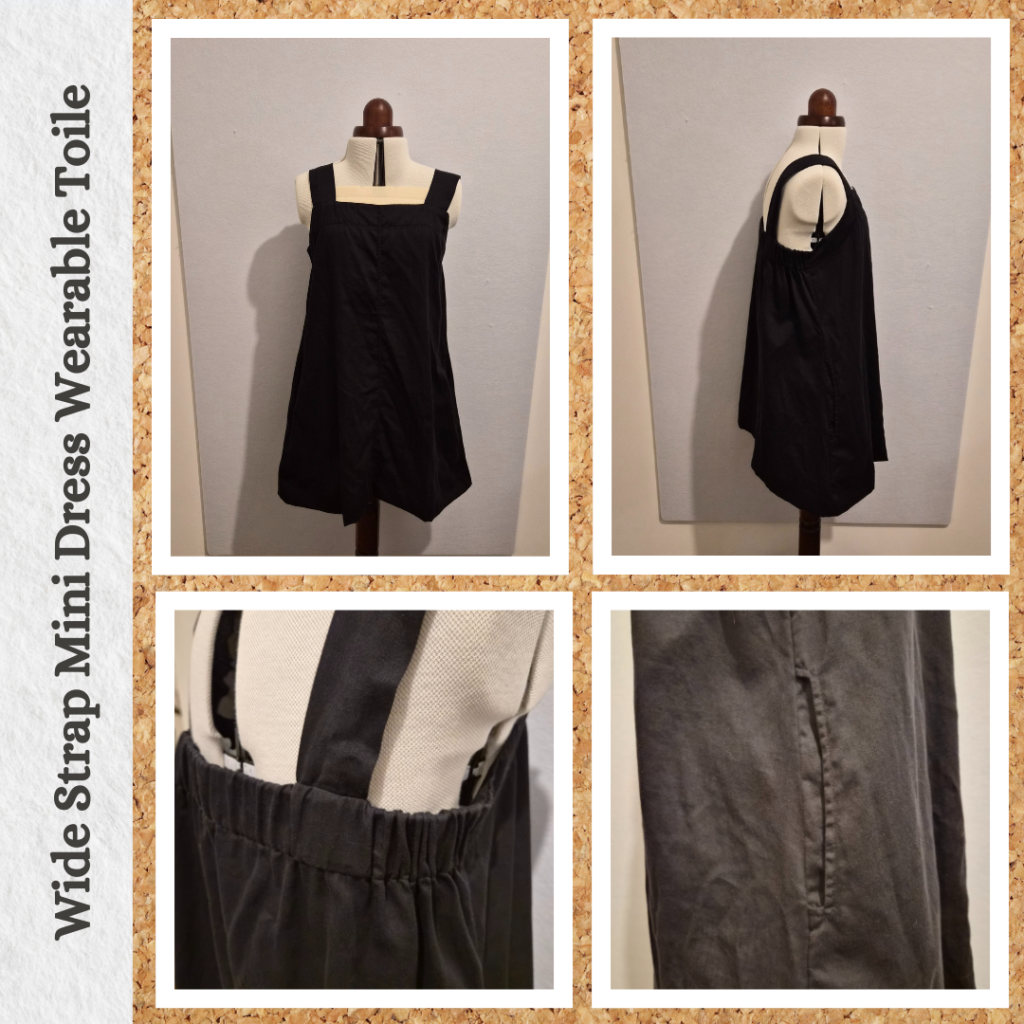
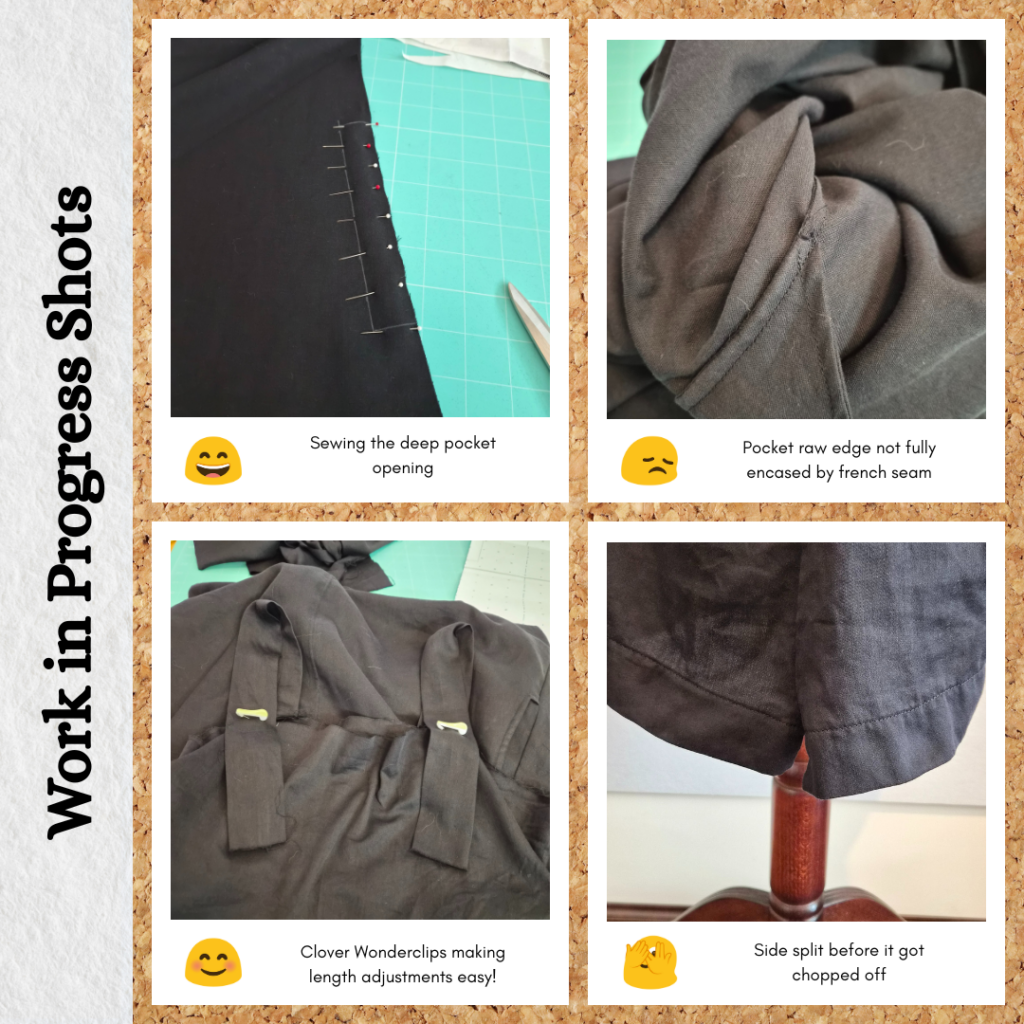
The design took into account french seams so it made sewing this really easy because the instructions were written with this in mind. So it was nice to be able to just follow the instructions as it for once haha. I really like this pocket design with the offset pocket opening with facing. But I did notice when it came to the side seams that the top of the pocket wasn’t fully enclosed, I think the pattern piece needs to end at a point and not be chopped off at the top. Which makes me glad once again for wearable toiling.
The hem split was interesting and I think it could be a handy technique to keep in mind for other projects. But given I’ve shortened this so much, I think I might be able to skip this part and just do a normal hem facing instead (to keep consistent with the way the top is finished).
One aspect that is made so much more easier with the right tools is figuring out the strap length. I’ve always hated this stage of sewing dresses because you either have to baste it down and then undo the basting to redo if it’s not right which is tedious, or you put a pin in and get stabbed 😑 But now I have Clover wonder pins which makes this part super easy. I ended up chopping off 14cm from the provided pattern piece.
The yoke pieces matched up properly along the top edge but I found it hard to pin it down in order to topstitch it to the bodice. So I ended up basting it with water soluble thread. I’m not sure if I messed up the measurements, or am I meant to ease it in? We shall see when I work with a fabric with a bit more body.
The wonder pins came in handy again for testing out the elastic length required for the back. I ended up reducing it by 4 cm as the suggested measurement left a bit of gaping around the armhole. I was really pleased with how simple it was to adjust and retry the dress on, yay for wonder pins!
Reflections
The dress fits well and feels secure and the back really is quite nice. The pieced front means it has a bit of a curve to it which is nice. I ended up shortening the dress a bit more and omitting the hem slits. I had to be careful because if I made it too short then it will start to look like a long top instead of a short dress.
Things I learnt:
- How to do french seamed hem slits
- A different pocket opening style
- Using wonder pins for testing lengths
So I like the dress. And sewing it should have been pretty chill. But it wasn’t thaaat enjoyable for reasons unrelated to the design of the pattern itself… And it’s totally on me for overthinking this, but I’ll vent a bit anyway.
Maybe I’m just not really understanding the business model of Peppermint Magazine, but this was a ‘formerly’ free pattern. As in, they used to offer it for free but decided that they needed to recoup some of the costs. But instead of putting a price on the pattern, or locking it behind subscription to the magazine, they give multiple prices that people can choose from. I think this is their way of trying to compromise? But I hate it. For a number of reasons. Firstly, ‘pay what you can’ makes it feel like they are guilting you. I ‘can’ pay $20. But I don’t pay $20 for most patterns in all honesty. I know most patterns will go on sale so I wait for the sale, and I don’t feel guilty about that, because the pattern companies that do sales have made their own business decision to have sales. And then there are the other companies that do lock patterns behind a subscription. Which I am fine with because I know I can safely ignore those patterns for now, until there is one I absolutely love enough to subscribe, in which case, their business model has worked as intended. But with ‘pay what you can’, it feels like they are asking me to put a price on the development of that pattern. Which is cruel. I never expect anyone who sews to be able to actually understand how much it costs for materials and effort to sew something. So I do not expect I properly understand how much it costs to develop a pattern. They should be deciding how much it was worth and how much they need to price it at in order to make a profit/break even and then I should then decide if I agree and pay the asked price if I do. Which is the normal way business should work??? ‘Pay what you can’ just feels so wishy-washy. I could just pay the minimum and move on, but then I feel like I’m undervaluing the pattern maker. But I can’t justify paying full price for a pattern when I don’t do that anywhere else but also, I don’t know what the quality is like and if I would feel satisfied paying the full amount. So I came up with my own approach. I paid the minimum ($2) for a very simple pattern and then paid the next level up ($5) for this pattern. And then if I decide to buy another pattern I’ll pay $10. And then if I buy any other patterns after that I’ll pay $15. But I won’t ever pay $20 because then it’s inconsistent with my normal pattern buying habits. Now that I’ve made one pattern, I think the quality is high and worth $15. But I’m annoyed at the whole thing because I’m trying to remove mental load so that sewing is more enjoyable but this payment approach has just added it back into the mix haha. I know I don’t need to be so pedantic about it all, but I also don’t like it when businesses act like charities. If the business model isn’t profitable, then asking people to prop it up is just delaying the inevitable…but then again Peppermint Magazine’s main business isn’t pattern making. Which is probably why I find it so hard to reconcile how I approach it all. In the end though, since I’ve decided my approach from now on, making the next version won’t come with all the overthinking LOL.
Categories: Sewing

Leave a Reply