Planning and Design
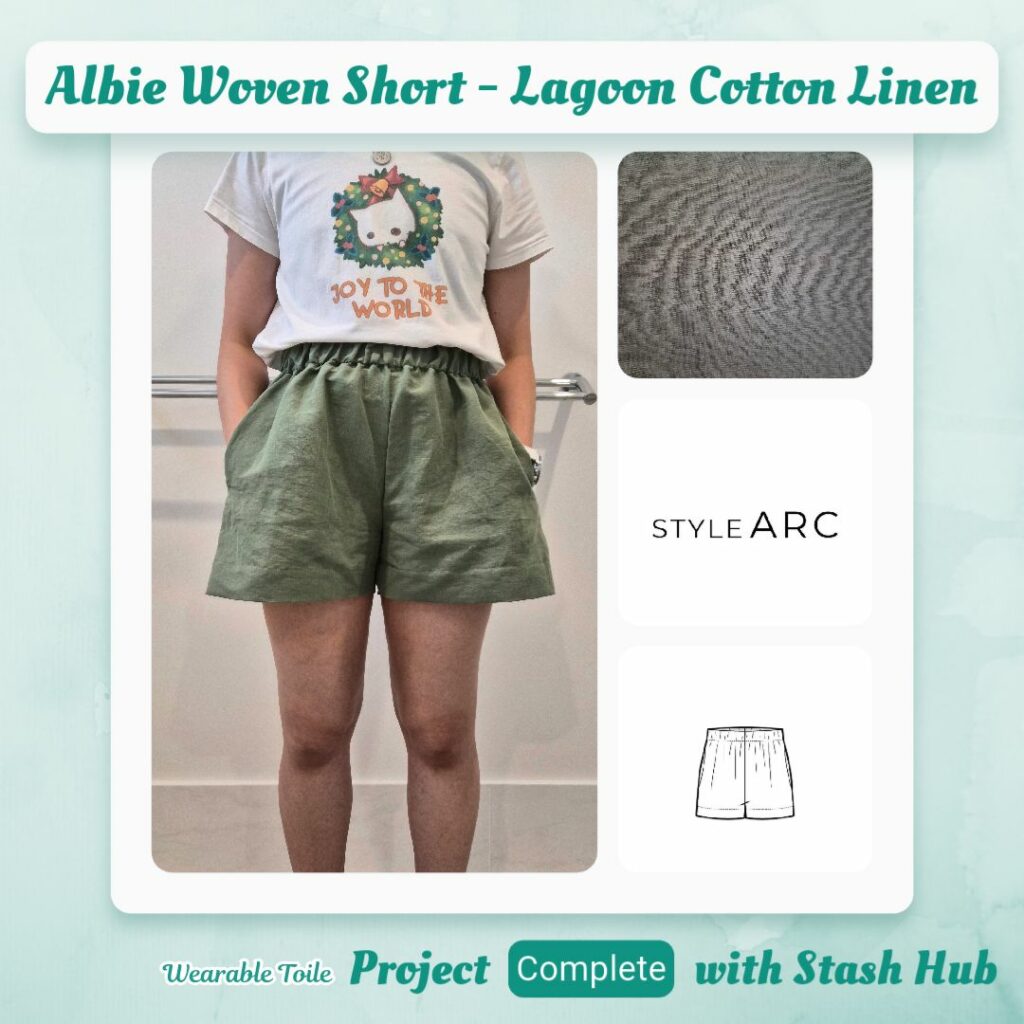
This pattern was a freebie from Style Arc that I didn’t think I’d want to make because it seemed like a pajama type pattern and I don’t need new pajamas. But then I bought some cotton gauze from Core Fabrics and the idea of lounge wear that also works as WFH wear (from the top up, for video calls) started to take shape. Which meant I wanted shorts that were comfy and the Albie fit into that loungewear aesthetic. So this is the toile for the cotton gauze version.
Materials
- Pattern
- Albie Short (Style Arc)
- Fabric
- Plain 112cm Cotton Linen Fabric – Lagoon (or maybe it’s Oregano. I can’t tell lol) (Spotlight)
- Thread
- Rasant col. X0651
- Notions
- 38mm wide knitted elastic
Sustainability Check
👍 Cotton linen fabric is 100% biodegradable
🤏 Rasant is OEKO-TEX but not biodegradable
👎 Elastic is likely polyester
So I went down the elastic rabbit-hole again. I did buy some woven non-roll elastic but now that I have it, it is very stiff. I think knitted elastic is the way to go for loungewear. And although there are so many types of elastic out there (Banrol, pajama, boxer, etc), I think I should really just stick to stuff that is easy to get in Australia…which really narrows down the options hahaha.
I’ve also rethought my approach to buying elastic. Before, I was trying to find a supplier that I could buy elastic in bulk because I hate buying by the meter and then having random useless amounts leftover afterwards. Feels so wasteful. But now I realise that I will mostly be using it for waistbands in shorts/pants/dresses so I will actually know roughly how much I need. So instead I can buy what I need per project rather than have a stash on-hand. Maybe slightly less convenient, but probably a better outcome overall. This also means I can ‘afford’ to buy the eco-elastics I’ve found. So far I’ve found two suppliers (Pattern Scissor Frock and Circular Sourcing). Funnily, both of these stores only allow you to buy by the meter, but luckily I’ll probably be wanting roughly 75cm for waistband elastics so if I buy 3m, I should theoretically not have any waste if I use it for 4 waistbands. And any offcuts will at least be biodegradable. I’ll probably still make my toiles with the ‘cheaper’ elastics, but I’ve also found a couple of stores that sell by 25cm/10cm increments which is helpful. And they cover different types too:
- Boo Designs – plush elastics
- Tessuti – non-roll knit elastic
- Weft & Warp – various (but not very comprehensive/consistent range)
Construction
TDCO Toile
Ok, time to try my short-cut TDCO method for elasticised pants/shorts again:
- In terms of hip measurements, I’m in between 10 and 12, so chose 12.
- That means for the crotch line I should follow the size 14.
- The top waistline I followed the size 14 to match the crotch line.
- I want short shorts but given the hemline is designed it seemed like a pain in the ass to the try and shorten it so just followed the size 14
- Measured the width of size 12 at hemline. From the size 14 crotchline, the same measurement equated to a size 10.
I made the TDCO Toile out of old bed sheets. The waistband attachment method was new to me. Because I had read the instructions ahead of time, I had adjusted the top waistband to include an extra 1cm so I could try and enclose the elastic. But the way I sewed it all together (sandwiched the elastic between the folded over 1cm and main waistband) was pretty awkward so think this is probably not the right way to go about it. However the fit was a success! I didn’t notice any discomfort in the crotch section and it didn’t take me long to get used to the waistband sitting on natural waist.

Wearable Toile
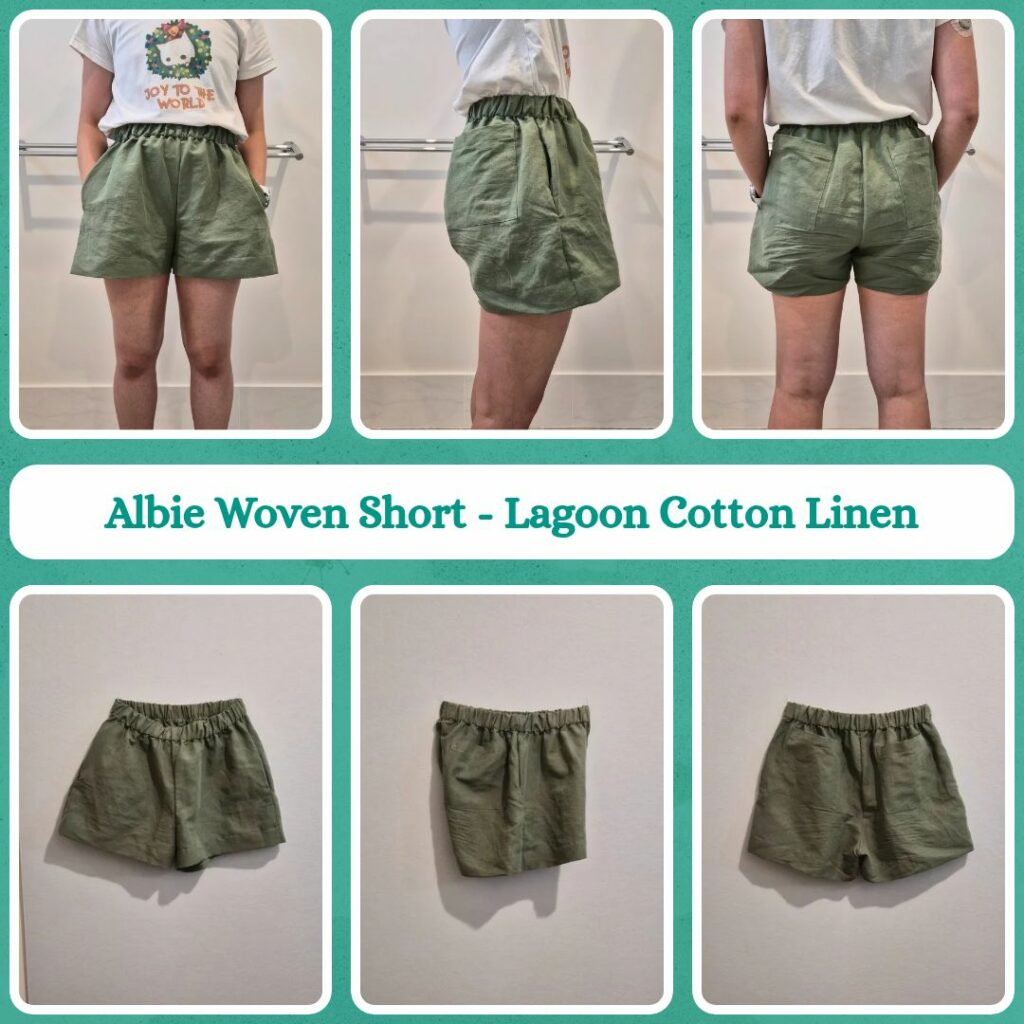
I did all the pockets, one to practice french seamed inseam pockets and two to check back pocket placement.
For the back pockets, I used the Clover hot hemmer to fold the edges under and it didn’t turn out that nice and straight because the fabric was so shifty. So next time I will use guide stitching instead. It would also be really nice to have pinking scissors, I’ve kinda gotten over lining all patch pockets and would rather pink the seams than overlock them. Not only faster but will reduce bulk.
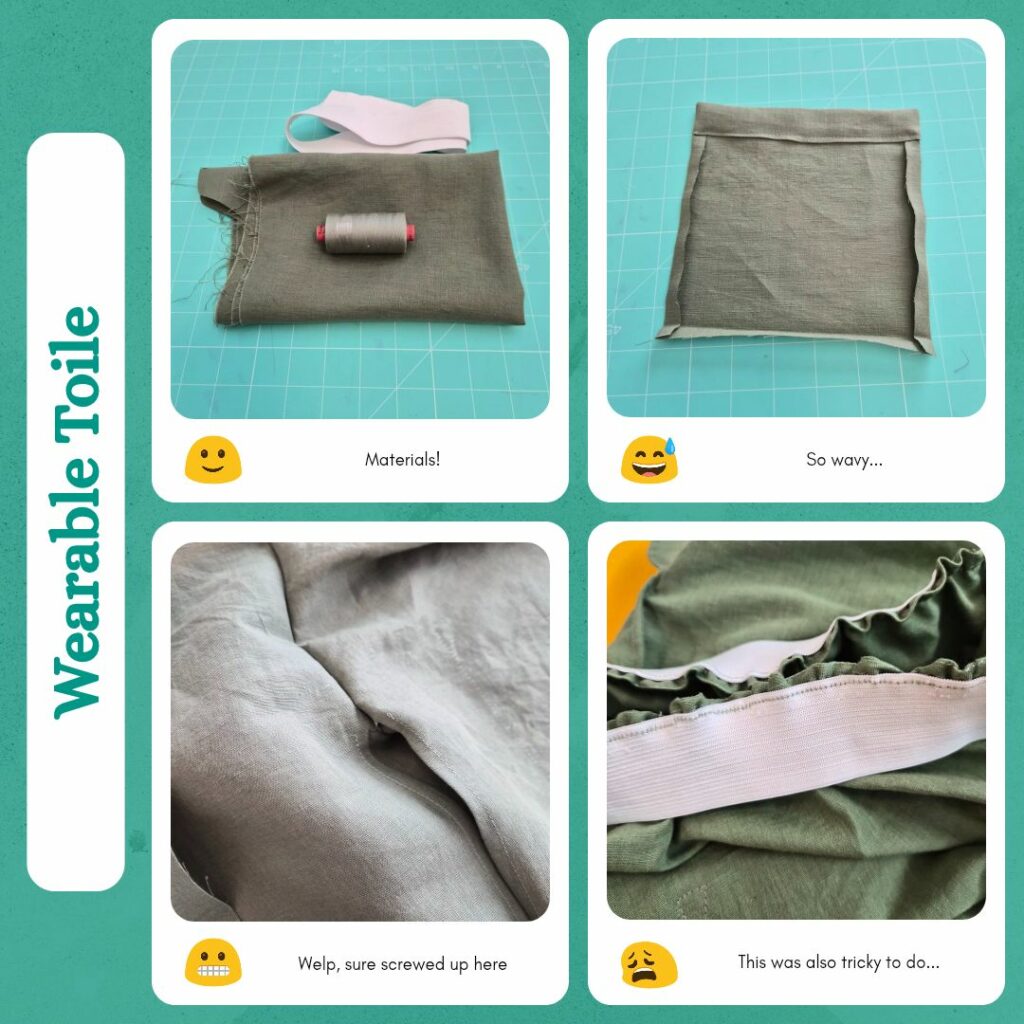
For the inseam pockets, I kinda stuffed up because I didn’t sew all the way to the edges when attaching the pocket bags to the side seams. I think I was unconsciously following the way pocket bags get assembled when french seams aren’t involved. I did have the In The Folds tutorial open, but there was major glare on my screen so I wasn’t able to really pay attention to the photos (I have since increased the brightness, not sure why it dropped lol). So very good that I’m practicing the method hahahaha.
The rest of the shorts was straightforward, although I could have been smarter about the french seams in the hem areas to reduce bulk. It wasn’t that big a deal but I’ll try to do it the ‘right’ way for the real deal.
For the waistband, I decided to sew the 1cm fold over down and then attach the elastic to this, so the elastic would cover the raw edge. But it was a bit tricky stretching and sewing the elastic down slightly offset from the edge… And even trickier when folding it over and topstitching it down. It worked better with the bedsheets because it was a more structured woven, but it did not work out so cleanly with this cotton linen blend 🙁 I think I will stick with a normal casing, stretching and sewing is annoying and I think I’d rather only do it when the elastic is already secure in a casing (for decorative purposes).
Reflections
I was a bit worried that by using french seams the crotch would become more uncomfortable but it was totally fine 😊 What actually ended up being uncomfortable was the waistband being itchy because it was a cotton linen blend. I’ve only ever used this type of fabric for tops, which aren’t up against the skin all the time. So I will definitely need to split the waistband from the shorts and use a 100% cotton fabric for the inner waistband. But the rest of the short was fine, in terms of fabric comfort. I didn’t like how high the pockets were, so will probably lower these by about 5cm. But other than that quite happy with this pattern!
Things I learnt:
- Alternate way of attaching elastic to a waistband (and that I don’t like it)
- Use guidestitching for marking fold lines on shifty fabrics
- Sew all the way along the pocket bag when attaching with french seams
- Cotton linen blends are too scratchy for close contact surfaces like waistbands
While the short-cut TDCO worked for this pattern, I wouldn’t definitively say it’s successful until it works for 3 different patterns. So that’s 1/3 😁
Categories: Sewing

Leave a Reply