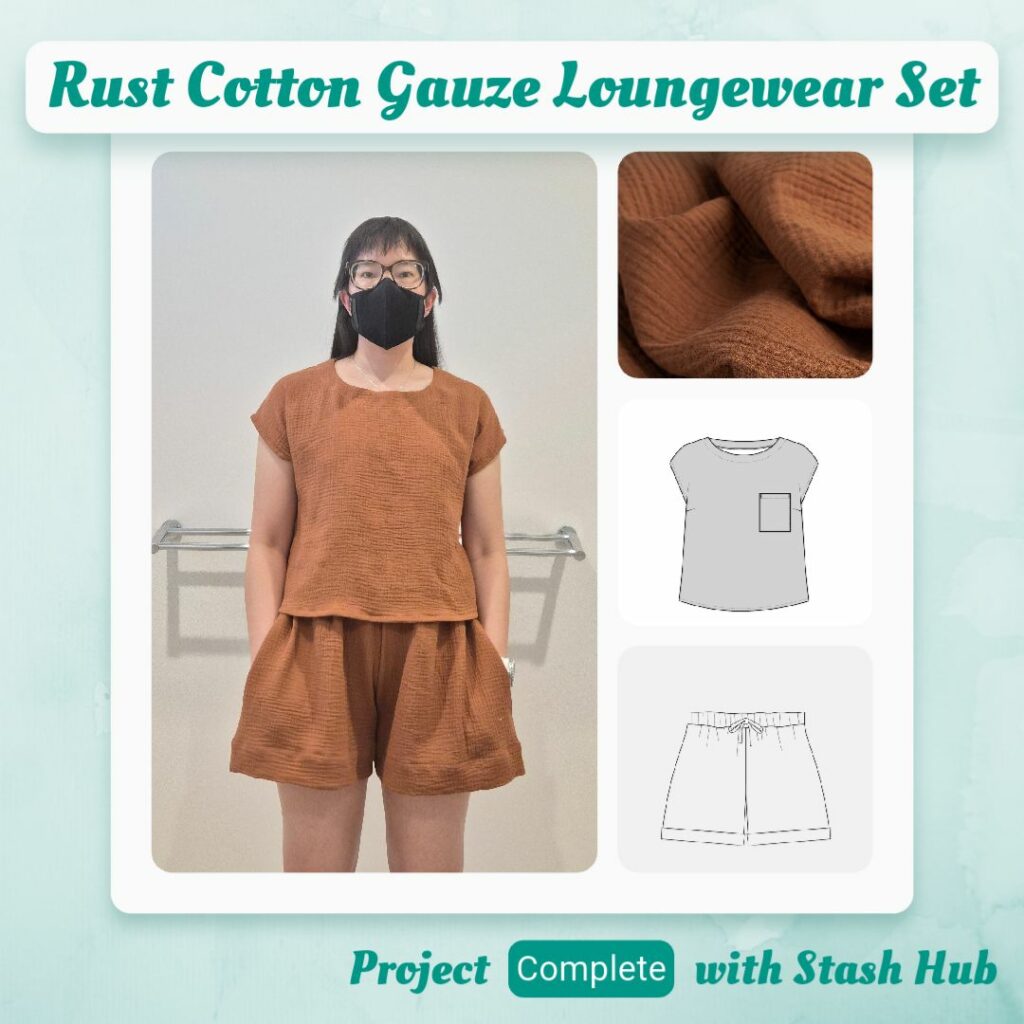
Planning and Design
I bought cotton gauze from Core Fabrics because I had never used it before. When I received it I realised it probably wasn’t suitable for a collared shirt. So started thinking about other ways to use the fabric. I decided on making lounge sets, my thinking was if the top looks nice enough then I could wear it on WFH days and feel comfortable while being presentable LOL.
I decided to pair the Hansie Top with the Anne Shorts because the other patterns I had in mind were both Style Arc so that part of my brain that likes things to match felt like I had to keep those together.
Materials
- Patterns
- Hansie Top (Seamwork)
- Anne Shorts (Cha’ Coud)
- Fabric
- Organic Cotton Double Gauze – Rust (Core Fabrics)
- Thread
- Rasant col. 277
- Notions
- 100% Cotton Lightweight Fusible Shirting – White
- 25mm Natural Rubber Organic Cotton Flat Biodegradable Elastic (Circular Factory)
- Lite Steam-a-Seam 2
Sustainability Check
👍 Fabric is 100% cotton
👍 Elastic is cotton and natural rubber and biodegradable
🤏 Fusing is 100% Cotton although the glue apparently isn’t biodegradable. This is the best I can source at the moment as an Australian so I’m not going to be too harsh on myself
🤏 I can’t figure out what Steam-a-Seam is made of but at least the backing is paper
🤏 Rasant is OEKO-TEX but not biodegradable
Construction
Preparation
I measured that I needed 75cm for the top and 1m for shorts. But was also able to save a little bit more fabric by cutting the facings alongside the shorts. If I was using 112 cm fabric, I would need 1.25m fabric for the shorts if adding pockets, otherwise 1m will suffice.
A thought I had while setting up to start sewing – one thing I need to get into the habit of doing is winding a spare bobbin before I thread the machine. Unless the bobbin I currently have 100% has enough on it to get me through a project. It will save me a little bit of time, but more importantly will mean I won’t have my flow disrupted mid-project.
Before starting I looked up Gauze in the Minerva Fabric guide. It suggested using a walking foot which seemed like a good idea. And I did a test with a size 80 needle to make sure it was suitable and I didn’t need to size down and it stitched fine with the default stitch length.
Sewing
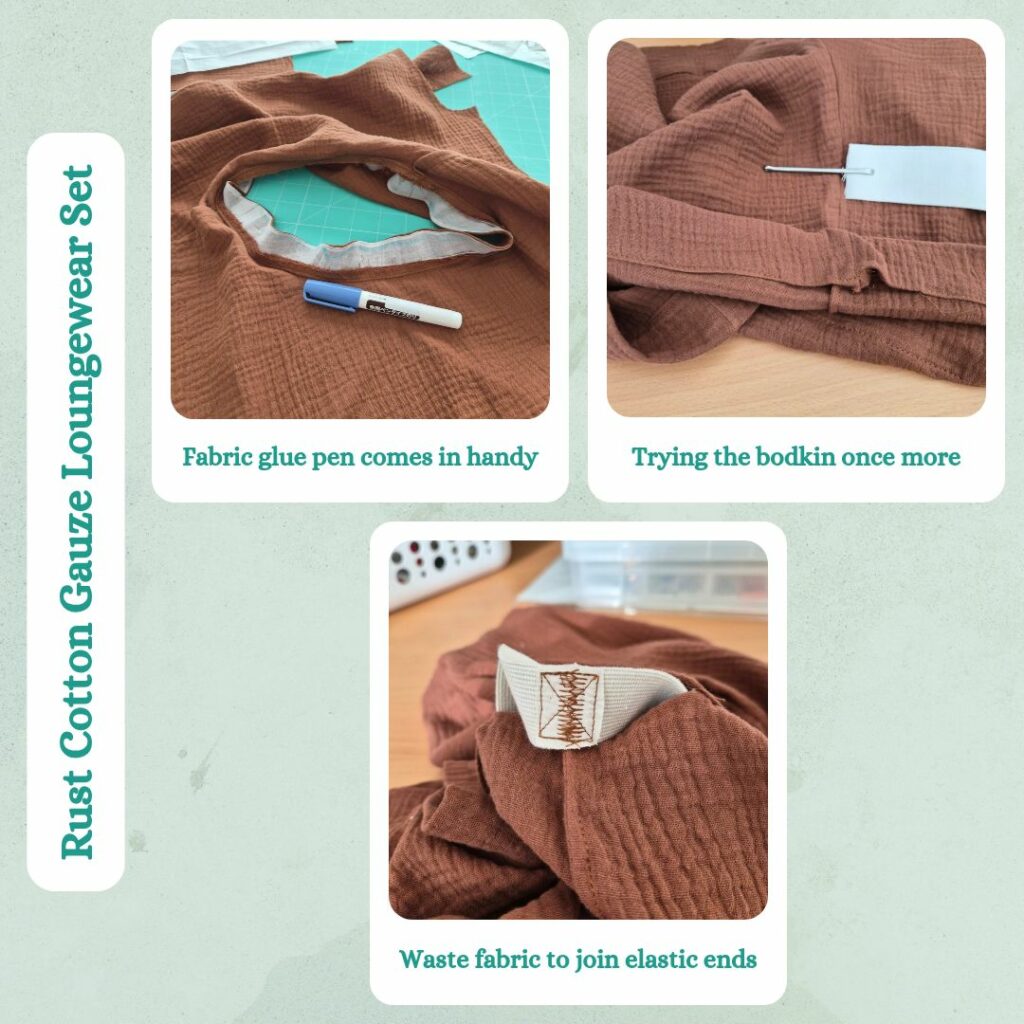
I think the fabric is reversible but made sure to mark the right side just in case. I started with the top first and used the (now usual) Closet Core perfect facings technique. For the seams on the facing, I trimmed close to the curve instead of clipping little triangles, was a lot less annoying and did the trick. Then when topstitching the facings down I used fabric glue to hold it down. For the sleeve and body hems I used Steam-a-Seam but without ironing it, it held well enough to allow me to topstitch it (the softness of the fabric meant I wanted to avoid locking myself in by ironing it down).
For the shorts, I made sure to refer back to In The Folds in seam pocket guide. For the shorts instructions I did check to confirm which pieces get sewn together first (back to back and front to front) haha. I remembered to not french seam the hem and casing fold overs and made sure to guide stitch and use fusible tape to hold the hems in place.
Then just like with the Konpeito Wide Strap Dress, I put the shorts aside to insert elastic after returning from Japan. When I did return, I cut the wrong size elastic, but it was ok because I needed that width for the other lounge set haha. I also used the bodkin. I think I’ve had issues using this tool in the past because I made it grip the elastic too ‘far down’ because for some reason I thought it would be stronger this way? But closer to the end of the elastic is better because then I can push the bar all the way down and make the grip as strong as possible.
Reflections
I guess my timing for this was bad too, it’s no longer the correct weather to wear this. I’m happy with how it turned out though and it does feel nice and soft.
Things I learnt:
- Cotton gauze is not as easy to work with as I thought, even though it’s a natural fabric
- How to use the bodkin tool properly
Categories: Sewing

Leave a Reply